
Blog
What Is Neural Vision Kit (NVK)? The End-To-End Computer Vision SDK For AI, Edge, And VR
A practical overview of Neural Vision Kit (NVK): who it is for and how it connects computer vision data, deployment, and monitoring.
What Is Neural Vision Kit (NVK)? The End-To-End Computer Vision SDK For AI, Edge, And VR
Neural Vision Kit (NVK) is a product idea for an end-to-end computer vision toolkit that helps teams go from camera -> dataset -> model -> deployment -> monitoring without stitching together a dozen separate tools. If you’re building anything involving AI vision, video analytics, edge inference, or XR (VR/AR/spatial computing), NVK is meant to be the “kit” that makes the full lifecycle feel like one system.
This article explains what Neural Vision Kit is, what problems it solves, and what a modern “vision kit” should include in 2026 and beyond.
Why “Neural Vision Kit” exists
Most computer vision projects fail in production for boring reasons:
- Data comes from many places (cameras, phones, drones, RTSP streams) and is messy.
- Labeling is slow and expensive.
- Models look great in a notebook, then drift in the real world.
- Deployment is painful across edge devices (Jetson, Intel, mobile) and cloud.
- Monitoring is an afterthought, so accuracy quietly decays.
Neural Vision Kit (NVK) is the answer to that end-to-end friction: a vision model SDK + platform workflow that standardizes the way you build and run vision.
Search note: if you’re searching for “computer vision SDK”, “AI video analytics platform”, “edge AI vision deployment”, “vision model monitoring”, or “active learning labeling”, NVK is designed to cover those needs under one roof.
What NVK includes (the “kit”)
A real Neural Vision Kit should feel modular, with a clear path from data to deployment.
1) Capture + Ingest
- Connect to RTSP/ONVIF cameras, recorded video, image folders, mobile uploads
- Support common formats and metadata (timestamps, location, device IDs)
- Create reproducible “data snapshots” for training and evaluation
2) Label + Active Learning
- Annotation UI or integrations
- Assisted labeling with pre-labeling, suggestions, and active learning
- Review workflows and QA rules (consistency checks, inter-annotator agreement)
3) Model Zoo + Training
- Starter models for object detection, segmentation, OCR, pose, tracking, and anomaly detection
- Fine-tuning pipelines that work for small datasets (transfer learning)
- Experiment tracking (configs, metrics, dataset version, checkpoints)
4) Evaluate + Benchmark
- Standard CV metrics (mAP, IoU, precision/recall), plus domain metrics (defect rate, false-alarm cost)
- Scenario-based evaluation (night/day, weather, camera angle, motion blur)
- Regression tests so changes don’t silently break performance
5) Deploy + Run Anywhere
- Packaging to cloud (Docker/K8s) and edge (Jetson, Intel NUC, ARM boxes)
- Export routes (ONNX, TensorRT, Core ML, TFLite) where appropriate
- Latency + throughput targets and profiling
6) Monitor + Improve
- Inference telemetry: latency, uptime, dropped frames
- Data drift and model drift signals
- “Feedback loop” that routes uncertain predictions back to labeling and retraining
7) Governance + Security
- Model registry, approvals, audit logs
- Access controls for sensitive video
- Privacy-first options for on-device inference
That’s the difference between a demo and an enterprise-grade vision product.
NVK use cases (high-value business outcomes)
Neural Vision Kit is a business tool: it should tie vision outputs to measurable value.
Industrial inspection and anomaly detection
- Detect defects, missing parts, scratches, cracks, misalignment
- Reduce scrap, rework, and warranty costs
- Provide traceability for quality audits
Retail analytics and operations
- Shelf stock detection, planogram compliance
- Queue length estimation and staffing alerts
- Loss prevention signals (where appropriate and compliant)
Security and safety automation
- Perimeter intrusion detection
- PPE compliance in industrial sites
- Incident detection and triage (human-in-the-loop)
Logistics and warehouses
- Barcode/OCR workflows
- Damage detection in packages
- Pallet counting and inventory support
Sports, broadcast, and XR
- Player tracking, pose estimation, highlight detection
- “Vision into VR”: real-time object understanding for immersive environments
- Spatial computing experiences that adapt to what the camera sees
If you’re building “AI + VR” experiences, NVK should handle the hard part: stable, low-latency perception.
“Neural vision” vs traditional computer vision
Traditional CV used hand-built features and brittle rules. Neural vision uses deep learning models that learn representations from data. But the modern challenge isn’t “can we train a model?"-it’s:
- Can we ship it to real devices?
- Can we prove it works across environments?
- Can we maintain it as reality changes?
Neural Vision Kit is a lifecycle tool for those production realities.
What makes NVK different from “just a model library”?
A model library gives you weights. A real Neural Vision Kit gives you:
- Pipelines (repeatable training and deployment)
- Data versioning (so you can reproduce results)
- Monitoring (so you can keep results good)
- Governance (so your org can trust it)
The “kit” is the operating system for your vision program.
Suggested NVK product modules (brandable naming)
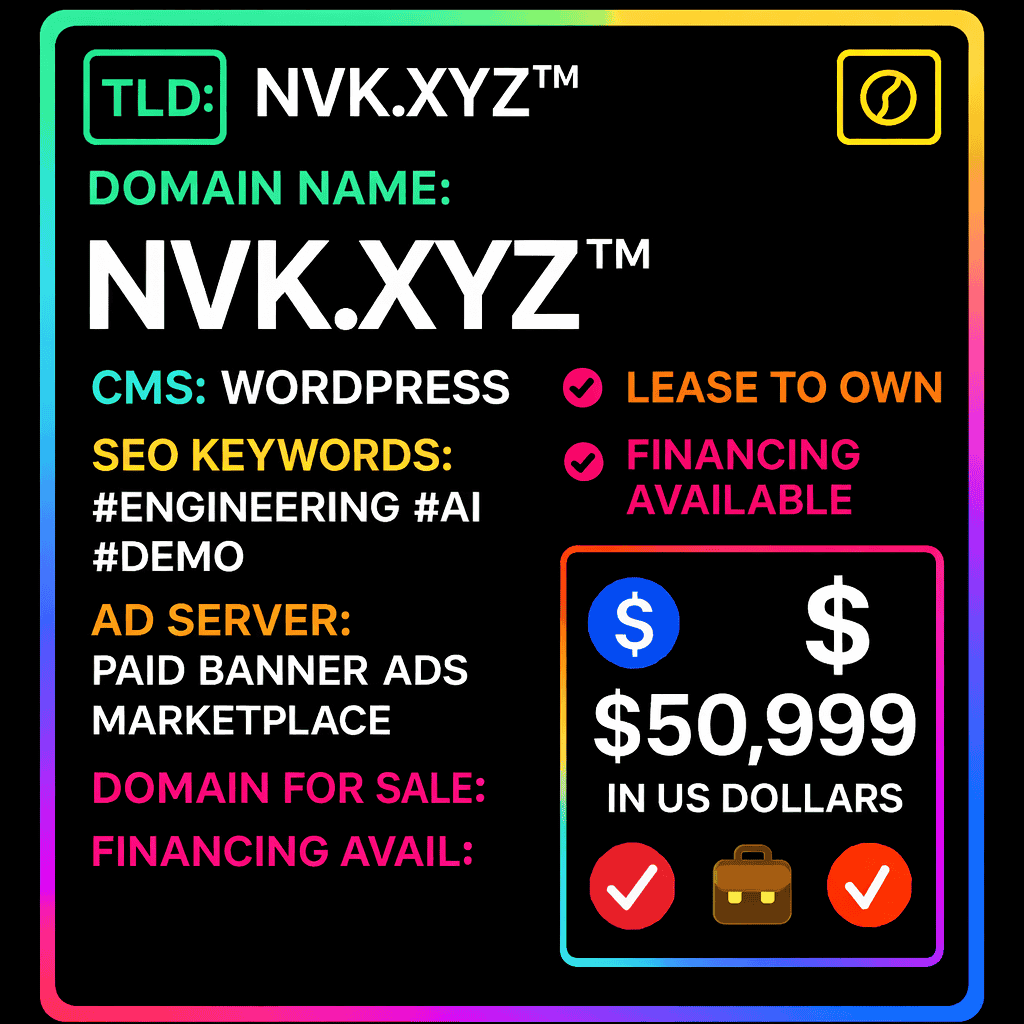
If NVK.XYZ™ becomes a real product, these module names make the platform feel cohesive:
- NVK Capture (camera + ingest)
- NVK Label (annotation + QA)
- NVK Train (fine-tune + experiments)
- NVK Evaluate (benchmarks + regression)
- NVK Deploy (edge + cloud packaging)
- NVK Monitor (drift + uptime + alerts)
- NVK Vault (registry + governance)
Getting started mindset: build one loop
If you’re starting from scratch, don’t try to “boil the ocean.” Pick one narrow loop:
- Capture 2-10 hours of representative video
- Label a small slice
- Train a baseline model
- Deploy to the real target device
- Monitor drift and feed hard examples back into labeling
That loop is what NVK should make effortless.
Next step
If you’re building a modern computer vision product and want it to survive real-world deployment-edge devices, mobile cameras, industrial environments, and XR-Neural Vision Kit is the right mental model: a production-first toolkit.
Explore the NVK concept and roadmap at NVK.XYZ™.
